Author name: ahana

Uncategorized

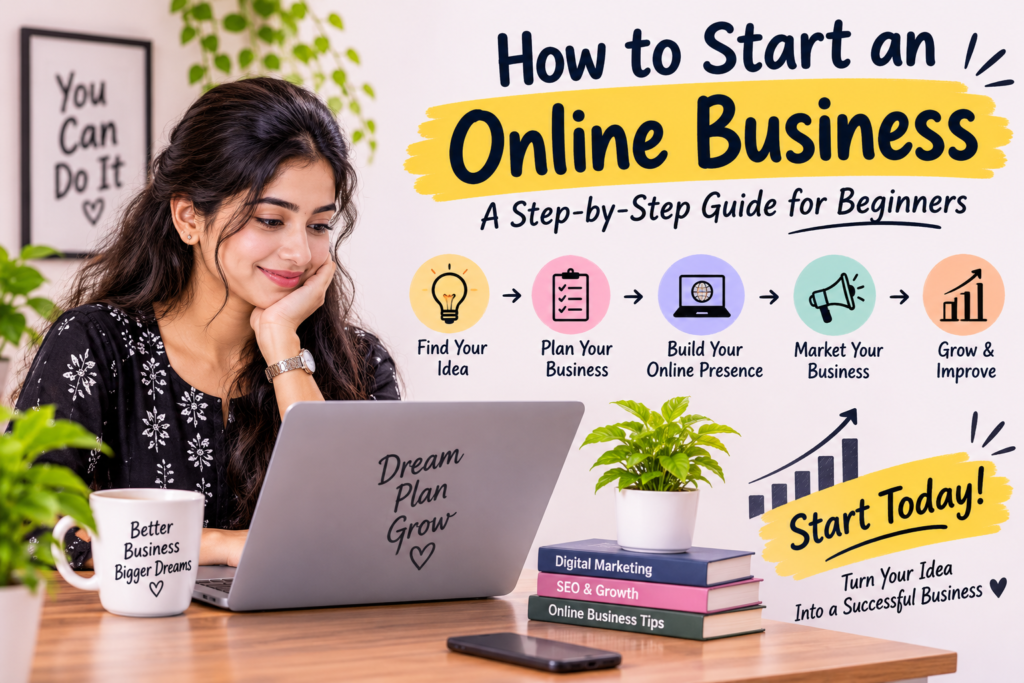
How to Start an Online Business: A Step-by-Step Guide for Beginners

Starting an online business has become a popular choice for many people today. With the help of the internet, social media, and online shopping platforms, it is now easier to start a business from home. You don’t need to be an expert or invest a lot of money at the beginning. If you have a good idea and are willing to learn, you can start small, connect with customers, and slowly grow your business online. The best online business sits at the intersection of your skills, your interests, and real market demand. 1. Choose the Right Online Business Idea The first step is selecting the right business idea. Think about your skills, interests, experience, and market demand. Your business should solve a problem or provide value to customers.Popular options include: – E-commerce Business: Sell clothes, accessories, electronics, or handmade products online.– Digital Marketing Agency: Provide SEO, social media marketing, and online advertising services.– Affiliate Marketing: Promote other companies’ products and earn commissions.– Freelancing: Offer services such as graphic design, content writing, and video editing.– Online Coaching: Teach skills, languages, or professional courses through online platforms.– Digital Products: Sell e-books, templates, and online courses Pick two or three ideas and shortlist the one you can start with the least money and the most confidence. 2. Validate Your Idea Before Spending Money Before spending money on your business, take some time to understand whether people are really interested in your idea. You can start by searching on Google, checking popular keywords, and looking at what people discuss in Facebook and Reddit groups. It is also helpful to check similar businesses, their prices, and customer reviews. This will give you a better idea of what customers are looking for. If you are still unsure, try offering a small service to friends or sharing your idea on social media to see how people respond. Their feedback can help you decide your next step. 3. Create a Business Plan A business plan provides direction for your online business. It doesn’t need to be complicated, especially when you are starting. Include your business name, products or services, target audience, pricing strategy, marketing plan, estimated expenses, and business goals. A clear business plan helps you manage your resources and focus on long-term growth. 4. Build a Professional Online Presence Your online presence is important for attracting customers and building trust. Start by creating a professional website that explains your business, products, services, and contact information. Choose a suitable domain name and create an attractive website design. You should also create business profiles on social media platforms such as Instagram, Facebook, and LinkedIn. Make sure your branding, logo, images, and content communicate a consistent business identity. 5. Use Digital Marketing to Promote Your Business Digital marketing is an important part of growing an online business. Having a good product or service is not enough if people don’t know about your business. You need to find ways to reach the right audience and make them interested in what you offer. Here are a few ways to promote your online business: – SEO: Helps your website appear in Google search results when people look for related products or services.– Social Media Marketing: Share creative posts, reels, and videos on platforms like Instagram and Facebook to connect with your audience.– Google Ads: Show your business to people who are already searching for products or services like yours.– Meta Ads: Use paid advertisements on Facebook and Instagram to reach people based on their interests and preferences.– Content Marketing: Create helpful blogs, articles, and videos that give useful information to your audience. You don’t have to use every marketing method at once. Start with the platforms that suit your business and understand what works best. Over time, these efforts can help more people discover your brand, visit your website, and become potential customers. 6. Keep Improving Your Business Starting an online business is just the first step. As time goes on, you will learn more about your customers and understand what works best for your business. Some ideas may give good results, while others may not work as expected. That’s completely normal when running a business. Try to check your business progress regularly. Look at your website, update old content, and make changes wherever needed. You can also try different marketing methods to see which ones bring more visitors and customers. Don’t expect everything to happen overnight. Building a business takes time, effort, and patience. Learn from your mistakes, listen to your customers, and make small improvements whenever possible. Even small changes can help your business grow over time. 7. Launch Your Business and Track Performance Once you have completed the basic planning, it is time to launch your online business. Starting a business may feel a little challenging at first, but you don’t need to make everything perfect before getting started. Begin with what you have and improve things step by step. Running a business from home needs structure. Set fixed work hours, create a dedicated workspace, and use tools like Trello, Notion, or Google Workspace to stay organized. Track key numbers such as website visits, conversion rate, and monthly revenue, and use them to make better decisions. Conclusion Starting an online business in 2026 is an exciting opportunity for beginners and experienced entrepreneurs. By choosing the right business idea, understanding your target audience, building a professional website, and using effective digital marketing strategies, you can create a strong foundation for success. Remember, every successful business starts with an idea and consistent effort. Start small, focus on customer satisfaction, keep learning, and take the first step towards building your online business today. Your business idea can become your next big opportunity!


The Best Google Analytics Reports for Marketers
Uncategorized

The Best Google Analytics Reports for Marketers

Google Analytics offers powerful reports that help marketers understand audience behavior and improve campaign performance. Key reports include Audience Reports for user demographics and interests, Acquisition Reports to track traffic sources, Behavior Reports to analyze website engagement, and Conversion Reports to measure goals and sales. Real-Time Reports help monitor live activity, while Campaign Reports evaluate marketing performance across channels. By using these insights, marketers can make data-driven decisions, optimize strategies, improve user experience, and increase conversions and business growth effectively. 1. User Acquisition Report The Best Google Analytics Reports for Marketers User Acquisition Report in Google Analytics helps marketers understand how visitors find and enter a website or app. It shows traffic sources such as organic search, direct visits, social media, paid ads, referrals, and email campaigns. This report provides valuable metrics including new users, engagement rate, sessions, conversions, and revenue generated from each channel. By analyzing this data, businesses can identify which marketing strategies attract the most valuable users. Marketers can then optimize campaigns, improve targeting, reduce marketing costs, and focus on channels that deliver better engagement, higher conversions, and stronger return on investment. Top of Form Bottom of Form 2. Traffic Acquisition Report The Traffic Acquisition Report in Google Analytics helps marketers analyze how website traffic is generated from different channels. It displays sources such as organic search, paid advertising, social media, referrals, direct traffic, and email marketing. This report focuses on session-based data, showing metrics like sessions, engagement time, bounce rate, conversions, and revenue. By studying these insights, marketers can understand which channels drive the most traffic and user engagement. It also helps businesses improve marketing performance, optimize advertising budgets, identify successful campaigns, and create better strategies to increase website visits, customer interactions, and overall business growth effectively. 3. Pages and Screens ReportThe Best Google Analytics Reports for Marketers Pages and Screens Report in Google Analytics provides detailed insights into how users interact with individual website pages and app screens. It tracks important metrics such as views, users, average engagement time, event count, and conversions. This report helps marketers identify which content performs best and which pages need improvement. By understanding user behavior, businesses can optimize content, improve website design, and enhance the overall user experience. It also helps reduce bounce rates and increase customer engagement. Using these insights, marketers can create better strategies to improve traffic, conversions, and overall digital marketing performance effectively. 4. Landing Page Report Top of Form Bottom of Form Top of FormThe Landing Page Report in Google Analytics helps marketers analyze the first page users visit when entering a website. It provides important metrics such as sessions, users, engagement rate, bounce rate, conversions, and revenue for each landing page. This report helps identify which pages attract the most visitors and which ones successfully convert users into customers. Marketers can use these insights to improve page design, content quality, call-to-action buttons, and overall user experience. By optimizing landing pages, businesses can increase website traffic, generate more leads, improve conversions, and achieve better digital marketing results effectively. 5. Engagement Overview Report The Engagement Overview Report in Google Analytics gives marketers a complete summary of how users interact with a website or app. It displays key metrics such as engaged sessions, average engagement time, event count, views, and conversions. This report helps businesses understand user behavior, measure content performance, and identify pages or features that attract the most attention. Marketers can use these insights to improve user experience, create more engaging content, and optimize marketing strategies. By analyzing engagement data, businesses can increase customer interaction, improve retention, boost conversions, and achieve stronger digital marketing performance effectively. 6. Events ReportThe Events Report in Google Analytics helps marketers track specific user interactions on a website or app. These interactions may include button clicks, video views, file downloads, form submissions, purchases, and other actions. The report provides valuable metrics such as event count, users, engagement, and conversions related to each event. By analyzing this data, marketers can understand how users interact with content and features. It helps businesses identify successful elements, improve user experience, and optimize marketing strategies. Using Event Reports, companies can increase customer engagement, improve conversions, and make better data-driven business decisions effectively. Top of Form Bottom of Form 7. Demographic Details Report The Best Google Analytics Reports for Marketers Demographic Details Report in Google Analytics helps marketers understand the characteristics of their audience. It provides information about users’ age, gender, language, interests, location, and device usage. This report helps businesses identify which audience groups engage most with their website or app. By analyzing demographic data, marketers can create targeted campaigns, personalize content, and improve advertising strategies for specific customer segments. It also helps businesses understand customer preferences and behavior more clearly. Using these insights, companies can increase audience engagement, improve customer experience, boost conversions, and achieve more effective digital marketing results successfully. 8. Tech Overview Report The Tech Overview Report in Google Analytics helps marketers understand the technology users use to access a website or app. It provides information about devices, browsers, operating systems, screen resolutions, and platforms. This report helps businesses identify whether users mainly visit from mobile phones, desktops, or tablets. Marketers can use these insights to optimize website performance, improve mobile responsiveness, and ensure compatibility across different devices and browsers. It also helps detect technical issues that may affect user experience. By improving technical performance, businesses can increase engagement, reduce bounce rates, and improve overall digital marketing success effectively. 9. Key Event Attribution (Conversion) Paths Report The Key Event Attribution Paths Report in Google Analytics helps marketers understand the customer journey before a conversion occurs. It shows the sequence of marketing channels users interact with, such as organic search, social media, paid ads, email, and direct visits, before completing a key event or purchase. This report helps businesses identify which channels contribute most to conversions and how different touchpoints work together. Marketers can use these insights to improve campaign strategies, allocate budgets effectively, and optimize customer journeys. By understanding attribution paths, businesses

Grow Faster in 2026: Smart Digital Marketing Tips for Success.
Uncategorized

Grow Faster in 2026: Smart Digital Marketing Tips for Success.

Grow Faster in 2026: Smart Digital Marketing Tips for Success. a) What is Digital Marketing .Digital marketing is the use of online channels such as websites, search engines, social media, and email to promote products or services and reach targeted audiences. It helps businesses build brand awareness, increase engagement, drive traffic, generate leads, and improve sales through data-driven and measurable strategies. 1. AI-Supported Content Marketing That Feels Human Grow Fast in 2026: Smart Digital Marketing Tips for Success the AI-supported content marketing blends technology with creativity to produce content that feels authentic and relatable. By using tools powered by OpenAI or Google, marketers can analyze audience behavior, predict trends, and generate ideas quickly. However, human oversight remains essential to add emotion, storytelling, and cultural relevance. The key is balancing efficiency with empathy-ensuring content speaks naturally to real people. When done right, AI enhances personalization, consistency, and scalability while maintaining a genuine voice. This approach helps brands connect deeply with audiences, build trust, and create meaningful experiences that drive long-term engagement and loyalty. Top of Form Bottom of Form 2. SEO That Targets Intent, Not Just KeywordsIntent-driven SEO goes beyond keyword stuffing by focusing on what users actually want. Search engines favor content that answers questions, solves problems, and meets clear needs. By understanding informational, navigational, and transactional intent, marketers can create content that matches expectations, improves rankings, boosts engagement, lowers bounce rates, and builds trust. This user-focused approach helps businesses attract the right audience and drive meaningful conversions in a competitive digital landscape. 3. Short-Form Video That Drives EngagementShort-form video has become a powerful way to capture attention and drive engagement in today’s fast-moving digital landscape. Platforms like TikTok, Instagram, and YouTube favor quick, visually engaging content that delivers value within seconds. These videos are easy to watch, share, and remember, making them ideal for brand storytelling and promotion. When businesses combine creativity, trends, and clear messaging, they can connect with audiences on an emotional level. Consistent posting and authentic content help build trust, increase visibility, and encourage interaction, ultimately improving reach, engagement, and conversions. Top of Form Bottom of Form 4.  First-Party Data and Trust-Based Marketing.First-party data and trust-based marketing are essential in today’s privacy-focused digital landscape. As platforms like Google and Apple reduce third-party tracking, businesses must rely more on data collected directly from customers, such as website interactions, purchases, and subscriptions. When used responsibly, first-party data enables personalized experiences while still respecting privacy. Transparency, consent, and clear communication help build trust and strengthen customer relationships. Customers are more likely to engage with brands that value their data and protect it. In an increasingly regulated and privacy-conscious environment, trust-based marketing supports loyalty, retention, and long-term growth. 5. Conversion-Optimized Landing Pages Grow Fast in 2026: Smart Digital Marketing Tips for Success are designed to turn website visitors into customers by focusing on specific goals like purchases, sign-ups, or lead generation. They include clear messaging, attractive designs, strong call-to-actions, and user-friendly layouts. By improving user experience and targeting audience needs, these pages help businesses increase conversions, reduce bounce rates, and achieve better digital marketing results effectively. 6.  Paid Advertising With Precision Targeting. Paid advertising with precision targeting maximizes ROI by delivering tailored messages directly to high-intent audiences, rather than casting a wide, inefficient net. Using platforms like Google and Meta, marketers leverage granular data—demographics, interests, and behavioral browsing patterns—to reach specific users at the exact moment they are ready to engage. This approach, including retargeting past visitors, minimizes wasted spend on irrelevant demographics and significantly increases conversion rates. By focusing on tailored relevance rather than sheer volume, businesses secure better quality leads and faster results compared to traditional, broad-reach media campaigns. 7. Social Proof and Community Building Social proof is the psychological phenomenon where people mirror others’ actions to guide their own behavior, making it a critical tool for building credibility and trust. By showcasing user-generated content, customer testimonials, and reviews, brands turn satisfied clients into advocates, providing validation that converts leads. This drives community building by fostering a sense of belonging among like-minded individuals, moving beyond simple transactions to create long-term loyalty. Whether through follower counts or expert endorsements, social proof acts as a powerful, low-cost trust signal, helping businesses grow by demonstrating that others already trust and enjoy their product. Top of Form Bottom of Form Top of Form Bottom of Form Top of Form Bottom of Form

Scroll to Top